Justice
He refused to support oppression, even when standing alone.
“People are of two types: they are either your brothers in faith or your equals in humanity”Ali Ibn Abi Talib
You scanned this because you received a pen, bookmark, or notebook during the Arbaeen procession. Welcome.
In just 10 minutes, discover why over 100 million people around the world continue to remember Imam Hussain (A.S) more than 1,300 years after Karbala.
Scroll
Grandson of the Prophet
“A man who gave everything—not to gain power, but to defend justice, human dignity, and freedom of conscience.”
Imam Hussain (626–680 CE) was the grandson of Prophet Muhammad (PBUH), the son of Ali (A.S) and Fatimah (s), and the third Shia Imam. He is universally revered as a global symbol of justice, courage, and resistance against tyranny.
In 680 CE, Imam Hussain (A.S) refused to pledge allegiance to the corrupt Umayyad Caliph, Yazid I, choosing instead to stand up for Islamic principles and human dignity. This defiance culminated in the tragic Battle of Karbala in modern-day Iraq. Surrounded by a massive military force, Hussain (A.S) and his small band of 72 family members and companions were cut off from water and brutally martyred.
His ultimate sacrifice transformed Karbala into an eternal epic of conscience over coercion. Today, millions worldwide commemorate his martyrdom annually during Arbaeen, honoring him as an inspiration for opposing oppression.
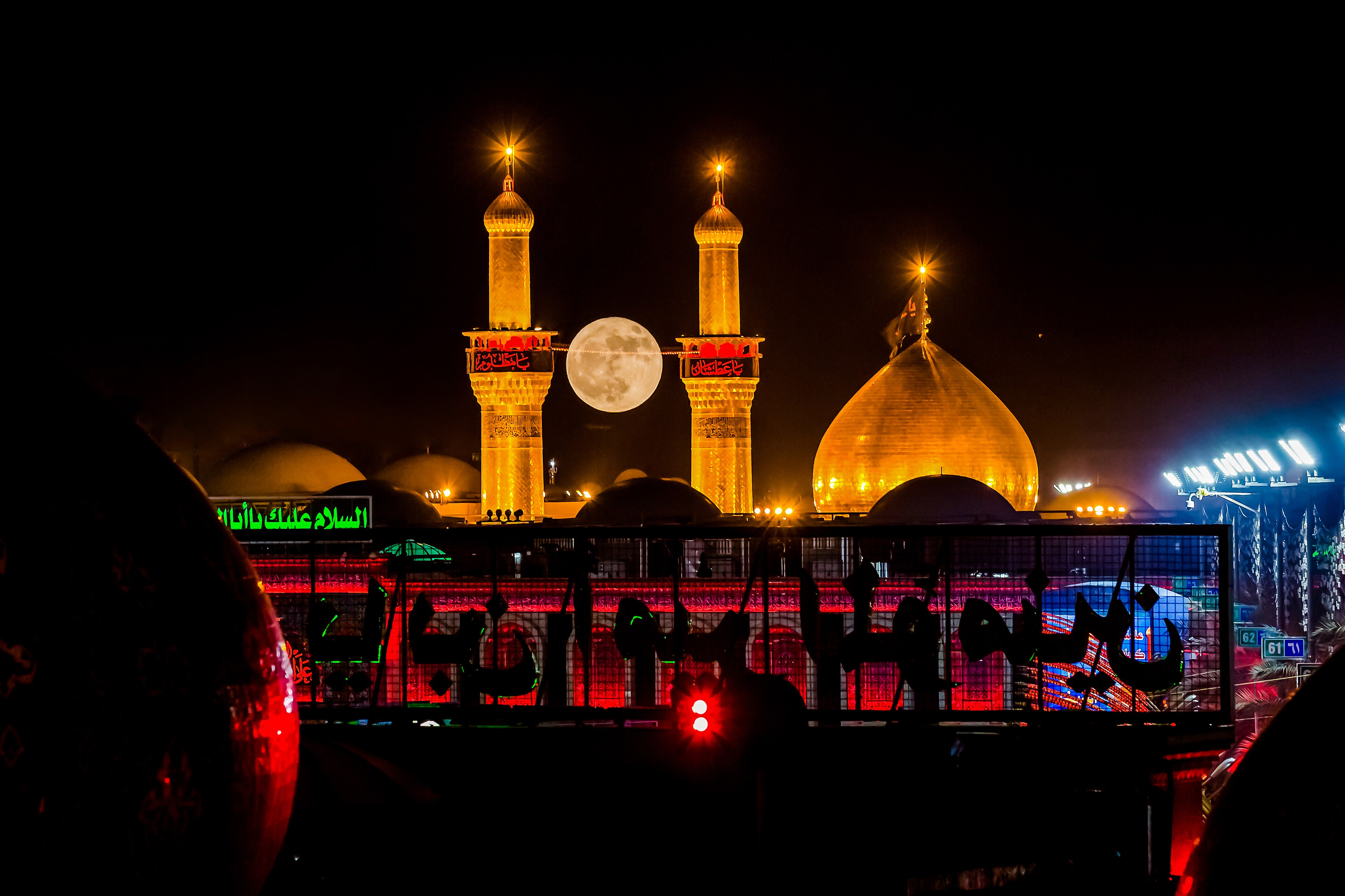
Three reasons
He refused to support oppression, even when standing alone.
He believed that remaining silent in the face of injustice would betray the teachings of Islam.
He taught that dignity should never be sacrificed for comfort or power.
“Far from us is humiliation.”
The people of Karbala
Leader of the movement for justice.
The voice of Karbala. After the tragedy she stood before the rulers and spoke the truth without fear.
“By Allah, you will never erase our remembrance.”
A flag bearer — Symbol of loyalty. He attempted to bring water for the thirsty children but was martyred before returning.
A six-month-old infant whose death became one of the most heartbreaking moments of Karbala.
The surviving Imam. Preserved the spiritual legacy and narrated what happened.
Karbala, 680 CE
A journey of truth, sacrifice & a message that lives on.
Refused allegiance to Yazid.
Left peacefully to avoid bloodshed.
Stopped by Yazid’s army.
Families—including children—were denied water for days.
Imam Hussain (A.S), his family, and companions were martyred.
Women and children were taken captive.
Lady Zainab (A.S) and Imam Zayn al-Abidin (A.S) exposed the oppression through powerful speeches.
Karbala is not just history — it is a timeless message that inspires millions to stand for justice.
Water flowing Water blocked
Then and now
More than 1,300 years later, the message of Karbala continues to inspire people around the world. Its timeless values speak to people of every faith and background. Three universal values to connect with today, such as:
Imam Hussain (A.S) refused to remain silent in the face of injustice, reminding us that justice is worth defending—even when it comes at great personal cost.
From the compassion shown to friend and stranger alike, to the generosity witnessed during the Arbaeen Walk, Karbala teaches us to care for others with kindness, dignity, and selflessness.
Karbala reminds us that true courage is standing by your principles, speaking the truth, and protecting the vulnerable—even when it is difficult.
“If you have no religion, and you do not fear the Hereafter, then be free in your worldly life.”Imam Hussain (A.S)
This beautifully reinforces that the message of Karbala is an appeal to every person’s conscience and humanity, regardless of their faith or background.
Learn more
The world’s largest gathering
Every year, approximately 40 days after Ashura (the day Imam Hussain (A.S) was martyred), millions of people from around the world walk to the city of Karbala in Iraq to honour the sacrifice of Imam Hussain (A.S). This annual pilgrimage is known as the Arbaeen Walk.
Commemorates his stand for social justice, freedom, and resistance against tyranny.
Involves walking up to 80 kilometers from Najaf to Karbala in Iraq as an act of supreme sacrifice and faith.
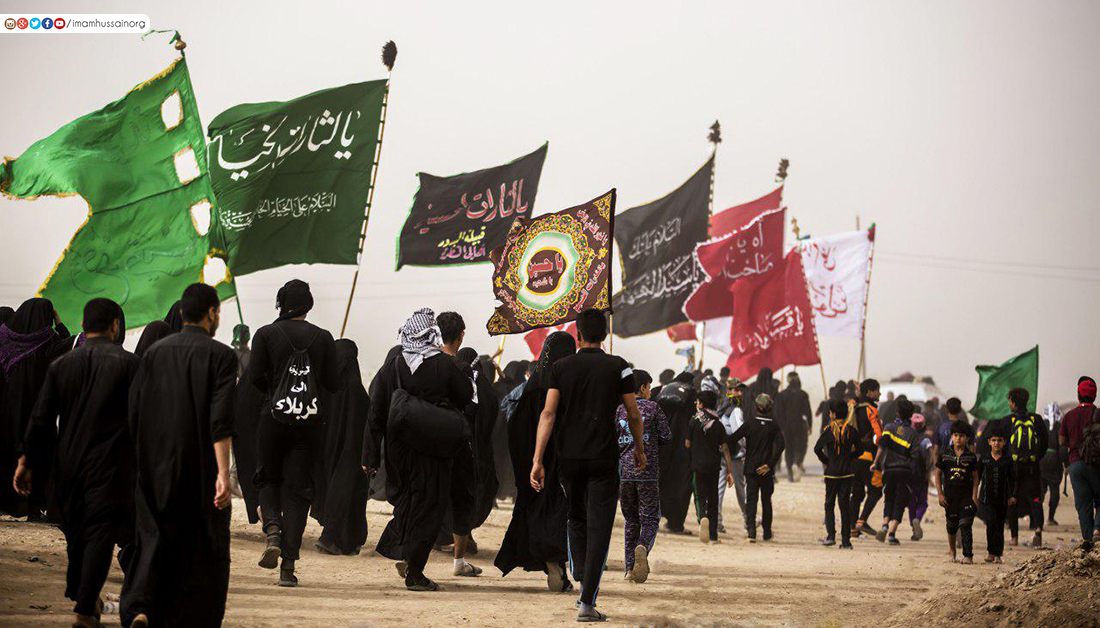
Represents one of the largest annual peaceful public gatherings globally, often exceeding 20 million participants.
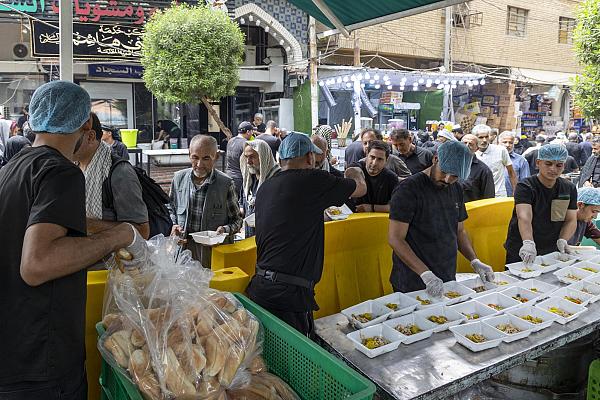
Showcases immense volunteerism where locals and charities provide millions of free meals, drinks, shelter (mawakib), and medical care free of charge to every visitor, regardless of nationality, race, or religion.
Unites diverse international Shia and non-Shia communities, reinforcing deep cultural and spiritual ties across borders.
Learn more
Explore the history and significance of Arbaeen:
Common questions
The conflict between Imam Hussain and Yazid was fundamentally a moral and ideological stand against tyranny rather than a mere political bid for power. Imam Hussain (A.S) refused to pledge allegiance because doing so would legitimize Yazid’s unjust and un-Islamic rule.
Commemorates the martyrdom of Imam Hussain (A.S) (the grandson of Prophet Muhammad (pbuh)) at the Battle of Karbala in 680 CE, and is observed as a solemn day of mourning and reflection on standing against injustice.
Shia Muslims mourn Imam Hussain (A.S) every year to remember Imam Hussain (A.S)’s supreme sacrifice and stand against tyranny.
People walk side by side or in casual groups during the Arbaeen Pilgrimage simply as a natural result of moving together in a massive, open crowd rather than following a strict military or ritual formation. Millions of people travel the roads from Najaf to Karbala sharing the path, food and dwellings. Women, men and children from all faiths and religions express solidarity with Imam Hussain (A.S) and his stand against tyranny and shared human dignity and values.
No, the message of Karbala is not limited to Muslims. While deeply rooted in Islamic history through the sacrifice of Imam Hussain (A.S) (the grandson of Prophet Muhammad (pbuh)), its core principles—resisting tyranny, upholding justice, and human dignity—speak to all of humanity.
Karbala teaches timeless lessons on standing against injustice, unwavering loyalty, and patience in deep hardship. It shows that moral integrity matters more than worldly power.
Take the Next Step
Karbala is more than a historical event. It is a timeless reminder that truth, justice, and compassion are worth standing for—even in the face of overwhelming odds.
Where to read next